Annual Ceremony

Kala Sarpa Bali

The most powerful annual ritual to pacify the Kala Sarpa Dosha and unlock your destiny

Frequency Annual
Duration Full Day

What is Kala Sarpa Bali?

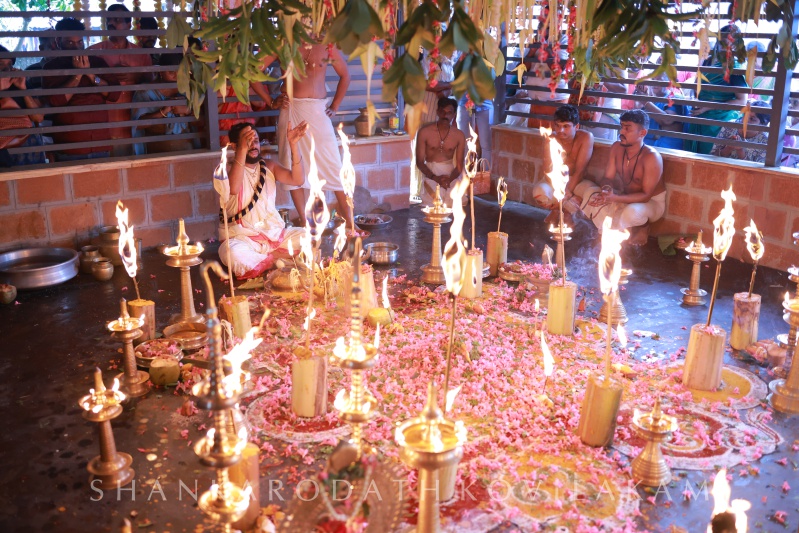
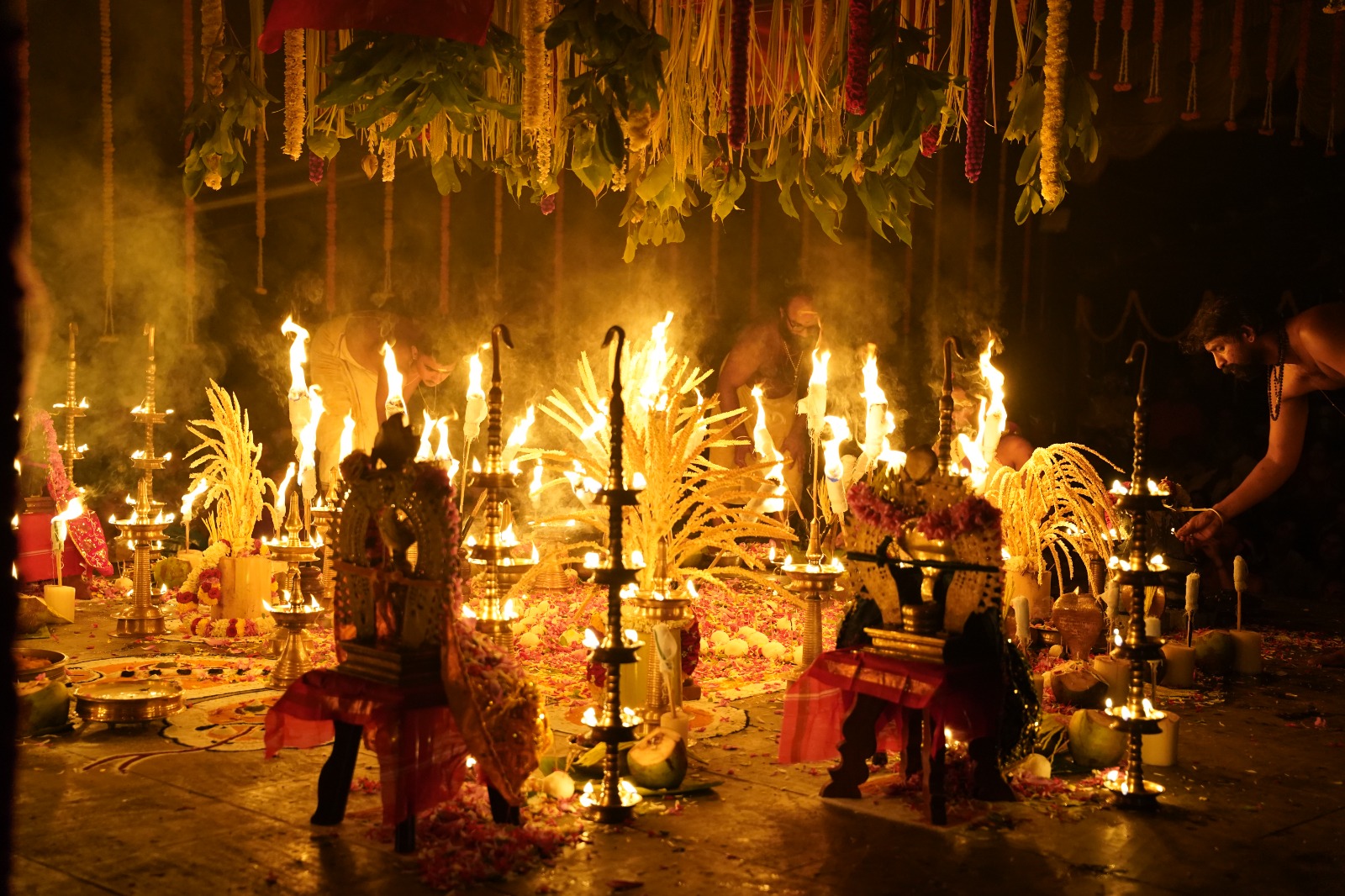
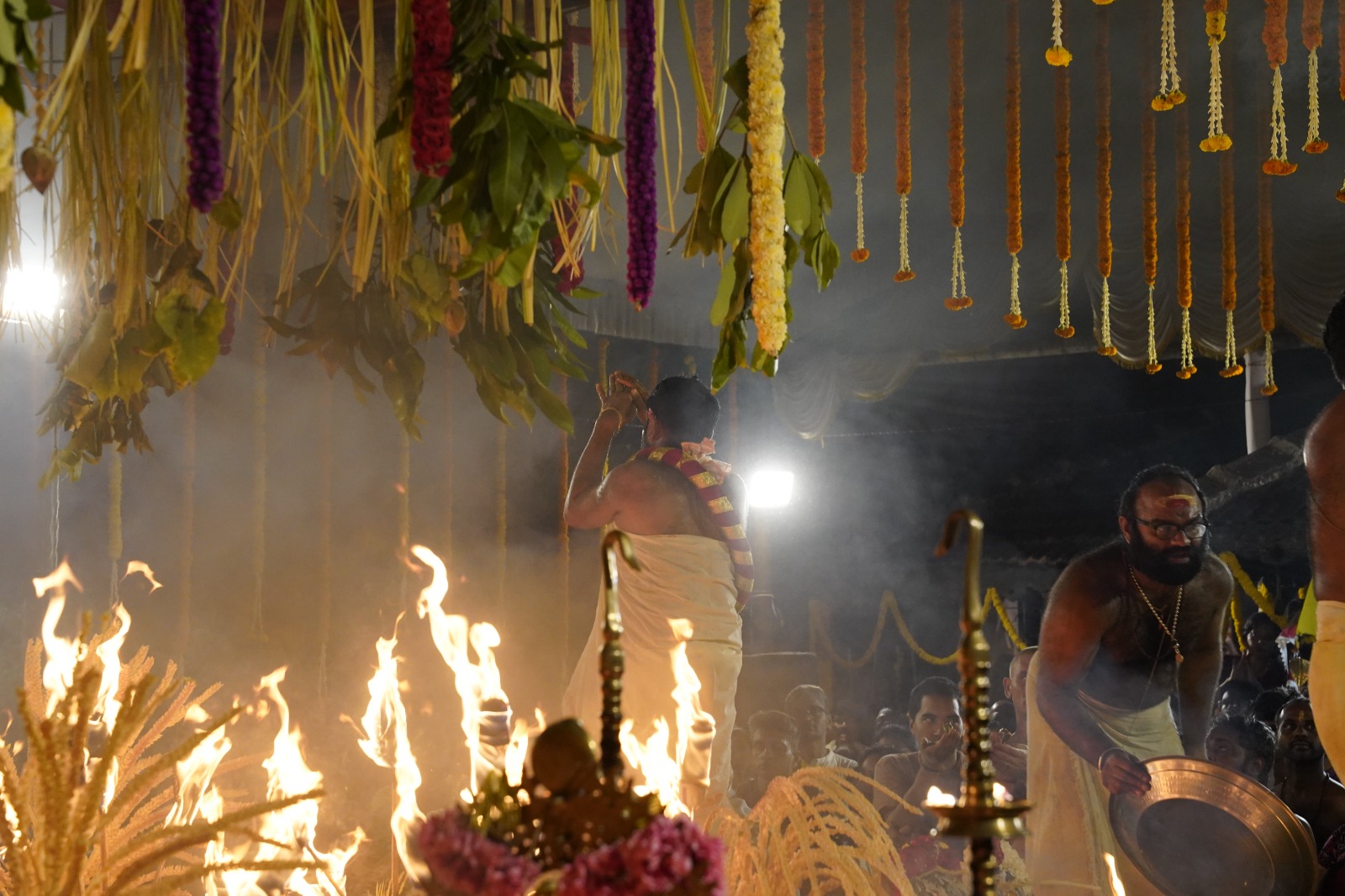
Kala Sarpa Bali is the most intensive and comprehensive annual ritual offered at Sree Pulikkal Vishwanagayakshi Temple. Performed for those with Kala Sarpa Dosha in their horoscope—where all seven planets are hemmed between Rahu and Ketu— this full-day ceremony combines fire oblations, serpent worship, ancestral appeasement, and Naga deity blessings to break the cosmic cycle of karmic delays and unlock the devotee’s blocked destiny.

The Three-Phase Ceremony

Kala Sarpa Bali unfolds in three sequential ritual phases across a full day:

1. Rahu-Ketu Tharpanam

Morning phase: Ancestral water offerings and mantra japa to Rahu and Ketu, individually addressing each planet’s placement in the horoscope and pacifying their karmic demands

2. Sarpa Bali Homam

Midday phase: The central fire ritual with 1,008 ahutis (offerings) into a consecrated fire, accompanied by the chanting of the Sarpa Sukta and Naga Stotra for comprehensive dosha removal

3. Navagraha Naga Pooja

Evening phase: Individual worship of the nine planetary serpent deities, closing the ritual by establishing harmony between all planets and releasing the Kala Sarpa blockage

The Tradition of Kala Sarpa Bali

Kala Sarpa Bali ritual

The Cosmic Serpent Cycle

Kala Sarpa Dosha arises when all seven planets—Sun, Moon, Mars, Mercury, Jupiter, Venus, and Saturn—are positioned between Rahu and Ketu in the birth horoscope. In Vedic Jyotish, this configuration is considered one of the most significant karmic indicators, signaling that the soul carries unresolved debts from past lives related to serpents, ancestors, or broken vows.

The Kala Sarpa Bali at this temple draws its authority from the Parashurama tradition of Kerala, where the pacification of Rahu and Ketu is performed through the intermediary of the Naga deities who are believed to govern these shadow planets. This direct channel to the serpent powers makes the ritual uniquely effective for breaking the Kala Sarpa cycle.

“Where all the planets between Rahu and Ketu are contained, the native faces great obstacles. But through the propitiation of the Nagas—who are the very body of Rahu and Ketu—these obstacles are dissolved and destiny is restored.”

— Parasara Hora Sastra, Chapter on Naga Remedies
The Twelve Types of Kala Sarpa Dosha

Ananta, Kulika, Vasuki & Others

There are twelve recognized forms of Kala Sarpa Dosha, each named after a different cosmic serpent (Ananta, Kulika, Vasuki, Shankhapala, Padma, Mahapadma, Takshaka, Karkotaka, Shankhanaada, Ghatak, Vishakta, and Sheshanaag), depending on which house Rahu occupies. Each form has slightly different effects and requires specific modifications to the standard Bali ritual.

Ambotti Thampuran analyzes the devotee’s horoscope before the ceremony to identify the specific type of Kala Sarpa Dosha and tailor the ritual accordingly, ensuring that the correct serpent deity is invoked for maximum remedial effect.

Why Annual Repetition Matters

Kala Sarpa Dosha is a karmic pattern that spans many lifetimes. A single Bali ceremony creates significant relief and opens blocked pathways, but the full dissolution of the dosha typically requires the ceremony to be performed annually for 3, 7, or 12 consecutive years, depending on the severity of the placement. Each annual ceremony deepens the remedial effect and accelerates the karmic resolution.

Who Should Perform Kala Sarpa Bali?

This most powerful annual ceremony is especially beneficial for those in these situations

Kala Sarpa Dosha Confirmed

Individuals whose horoscope has been verified by a Jyotish expert to contain one of the twelve forms of Kala Sarpa Dosha.

Persistent Financial Blocks

Those who work diligently but cannot sustain financial growth, with wealth earned quickly dissipating without explanation.

Delayed Marriage

Individuals past typical marriage age facing unexplained rejections or broken engagements despite being suitable in all respects.

Progeny Difficulties

Couples facing infertility, repeated miscarriages, or inability to conceive despite medical clearance on both sides.

Sade Sati & Rahu Dasha

Those currently running Rahu Mahadasha, Ketu Dasha, or Saturn’s Sade Sati who face extreme turbulence and setbacks.

Ancestral Karmic Debt

Those from families where serpent worship was practiced historically but discontinued, causing generational patterns of suffering.

Career Plateau

Talented professionals whose careers inexplicably stall just before major breakthroughs, with opportunities repeatedly falling through at the final stage.

Recurring Nightmares

Individuals plagued by recurring nightmares involving serpents, water, or ancestors—a classical sign of unresolved Naga and Rahu-Ketu karma.

Frequently Asked Questions

How do I confirm if I have Kala Sarpa Dosha?

Kala Sarpa Dosha is confirmed by checking whether all seven planets in your birth chart (Sun, Moon, Mars, Mercury, Jupiter, Venus, Saturn) are positioned between Rahu and Ketu. You can verify this with a Jyotish expert using your exact date, time, and place of birth. Contact us with these details and Ambotti Thampuran can also advise.

How many times should I perform Kala Sarpa Bali?

Depending on the severity of the dosha: mild cases show significant improvement after 1–3 annual ceremonies. Moderate to severe Kala Sarpa Dosha typically requires 7 annual repetitions for full resolution. The most deeply rooted karmic forms may require 12 consecutive years of annual ceremony. Ambotti Thampuran can recommend the appropriate course after reviewing your horoscope.

Can I attend if I cannot be present in person?

Yes. Your participation can be registered by proxy—the priest takes your name, nakshatra, gotra, and intention into the sankalpa and performs the full ritual on your behalf. Prasadam (sacred ash, turmeric from the ritual, and blessed items) will be dispatched to you after the ceremony. In-person attendance is always more powerful, but the proxy method is fully accepted in this tradition.

What is the difference between Kala Sarpa Bali and Navagraha Homam?

Navagraha Homam addresses all nine planets generally and provides broad planetary harmony. Kala Sarpa Bali is specifically and exclusively for those with the Kala Sarpa Dosha configuration and works directly through the Naga deities who govern Rahu and Ketu. Many devotees with Kala Sarpa Dosha perform both— quarterly Navagraha Homam for ongoing planetary balance and the annual Kala Sarpa Bali for the core dosha remedy.

When is the annual ceremony typically held?

The annual Kala Sarpa Bali is scheduled on the most auspicious Naga Nakshathra date of the year—typically on or around Ayilyam in the month of Karkidakam (July–August), considered the most potent time for serpent deity worship. Contact us for the confirmed date of the upcoming ceremony and to register your slot before the 25-participant limit is reached.

Enquire About Kala Sarpa Bali

Contact us to confirm the date and secure your place in the annual ceremony